Net pen vs. sea cage: what the terms mean on a permit
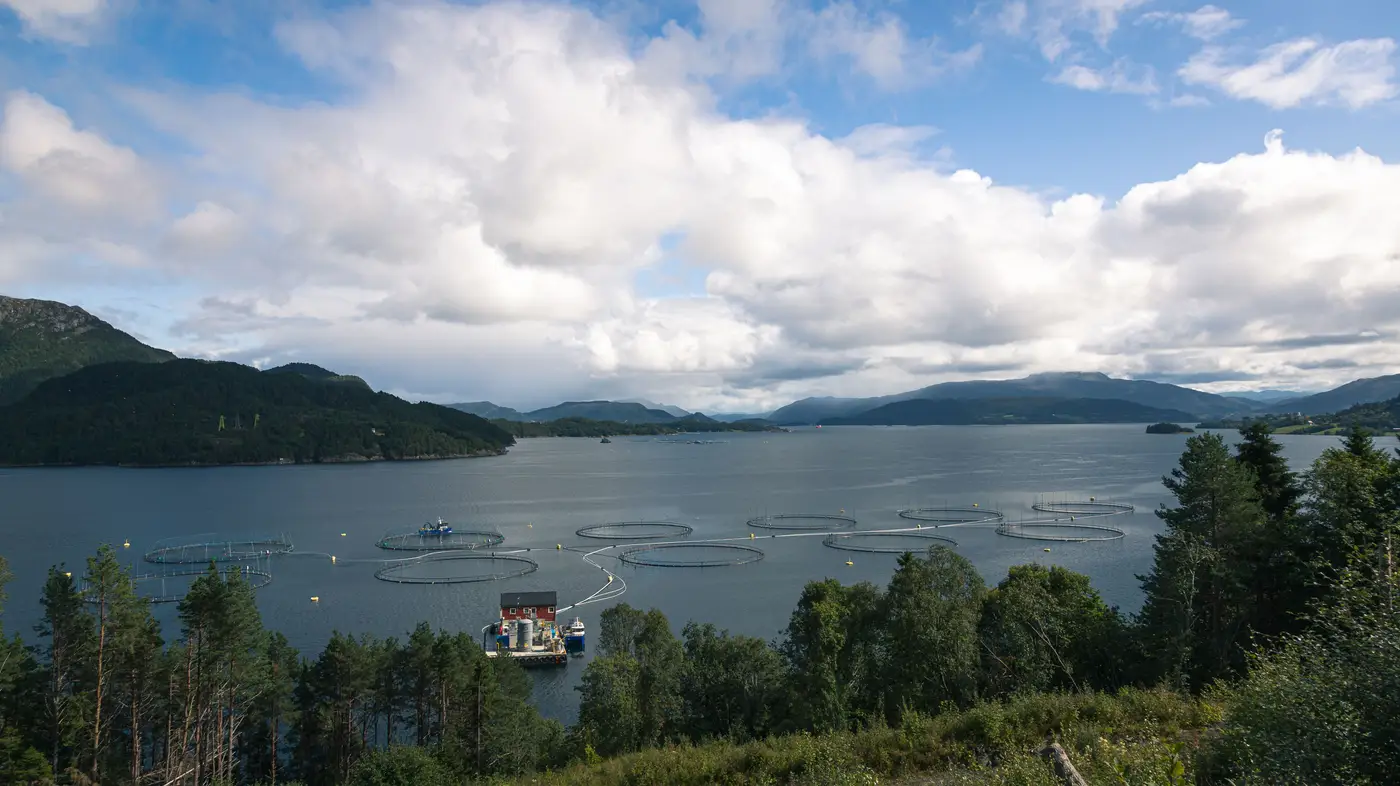
If you've reviewed enough permit applications, you've seen the same structure described three different ways depending on who filled out the form. One operator calls it a net pen. Another writes sea cage. A third just puts "floating cage system" and leaves you to figure out what's actually going in the water. None of them are wrong. The terms overlap enough that most applicants use whichever one they learned first, and that's usually a function of where they trained or which country's gear catalog they bought from.
Net pen
"Net pen" is the term you'll hear most often from operators and regulators on the Pacific coast of North America, particularly in salmon farming. It describes a floating frame, usually steel or high-density plastic, with a net suspended below it to hold fish. The frame sits at the surface, moored to the seabed or shoreline with anchors and cables. The net itself is the containment barrier. Depth, mesh size, and predator netting are the details that matter for a stocking or containment condition on a license.
Sea cage
"Sea cage" means the same physical structure, nearly always. It's the term you'll see more in Scottish, Norwegian, and broader European permit language, and in a lot of the engineering and gear-supplier literature that comes out of those industries. Some jurisdictions use "cage" as the generic umbrella term and "pen" for a specific style of frame, but in practice, if an application describes a circular or square floating collar with a net bag hanging beneath it, you're looking at the same thing a West Coast officer would call a net pen.
Where the terms genuinely diverge is at the edges. "Sea cage" sometimes gets used for rigid submersible cages, the kind that can be lowered below the surface in rough weather, which net pen almost never does. If an applicant's description includes submersible depth control, that's worth flagging separately from a standard surface pen, because the footprint and the visual signature from above can change seasonally.
Why the label matters for licensing
For permitting purposes, the vocabulary issue is a mapping issue. Your licence conditions are usually written around structure type and footprint, not the word the applicant chose to use. A stocking density cap, a mooring swing radius, a minimum separation distance from another lease. All of those depend on knowing what's anchored in the water column and how much area it occupies, not on whether the applicant's cover letter said pen or cage.
That's where inconsistent terminology becomes a real operational problem rather than a vocabulary quibble. If three operators in the same bay describe functionally identical structures with three different terms, and your records are organized by the applicant's own wording, cross-referencing what's permitted against what's on the water gets harder than it should be. A site visit tells you what's there. It doesn't automatically tell you whether it matches the footprint on file, especially once moorings have shifted or a raft's been added since the last inspection.
Other structure types worth distinguishing
Net pens and sea cages aren't the only gear types you'll see on an application. Longlines, used mainly for mussel and kelp cultivation, run a horizontal line near the surface with droppers hanging down, and they have a very different footprint signature than a cage array. Rafts, common in oyster and some mussel operations, are flat floating platforms with suspended trays or bags. Each of these has its own area-estimate math, and none of them look like a circle of net pens from above.
Keeping those categories straight across a licence area full of mixed operations, salmon pens next to a shellfish longline lease next to a kelp raft, is exactly the kind of cross-checking that tends to fall behind when you're relying on file notes and the occasional site visit. Seafarm Mapping builds a polygon layer of what's visible on the water each quarter, labeled by structure type, so the gear in the water gets compared against the gear on the permit without someone driving out to count net pens by hand.
If your licence area has grown past the point where you can track every structure from memory, it might be worth seeing what that comparison looks like for your own waters.